
Software Integrations
Payment Processing Explained
An incredible amount of technology works behind the scenes every time a customer pays. At JadaPay, we believe business owners should understand exactly how they get paid — so you can reduce fees, improve cash flow, and choose the right payment solution for your business.
EMV, tokenization & PCI DSS
Deposits in 1–2 business days
Understand every fee you pay

Behind Every Tap
From encryption to settlement, our team helps you understand every step of the payment process and answers your questions along the way.
No cost, no obligation
Understand every fee you pay
Deposits in 1–2 business days
Real people, not a call center

Know Where Your Fees Go
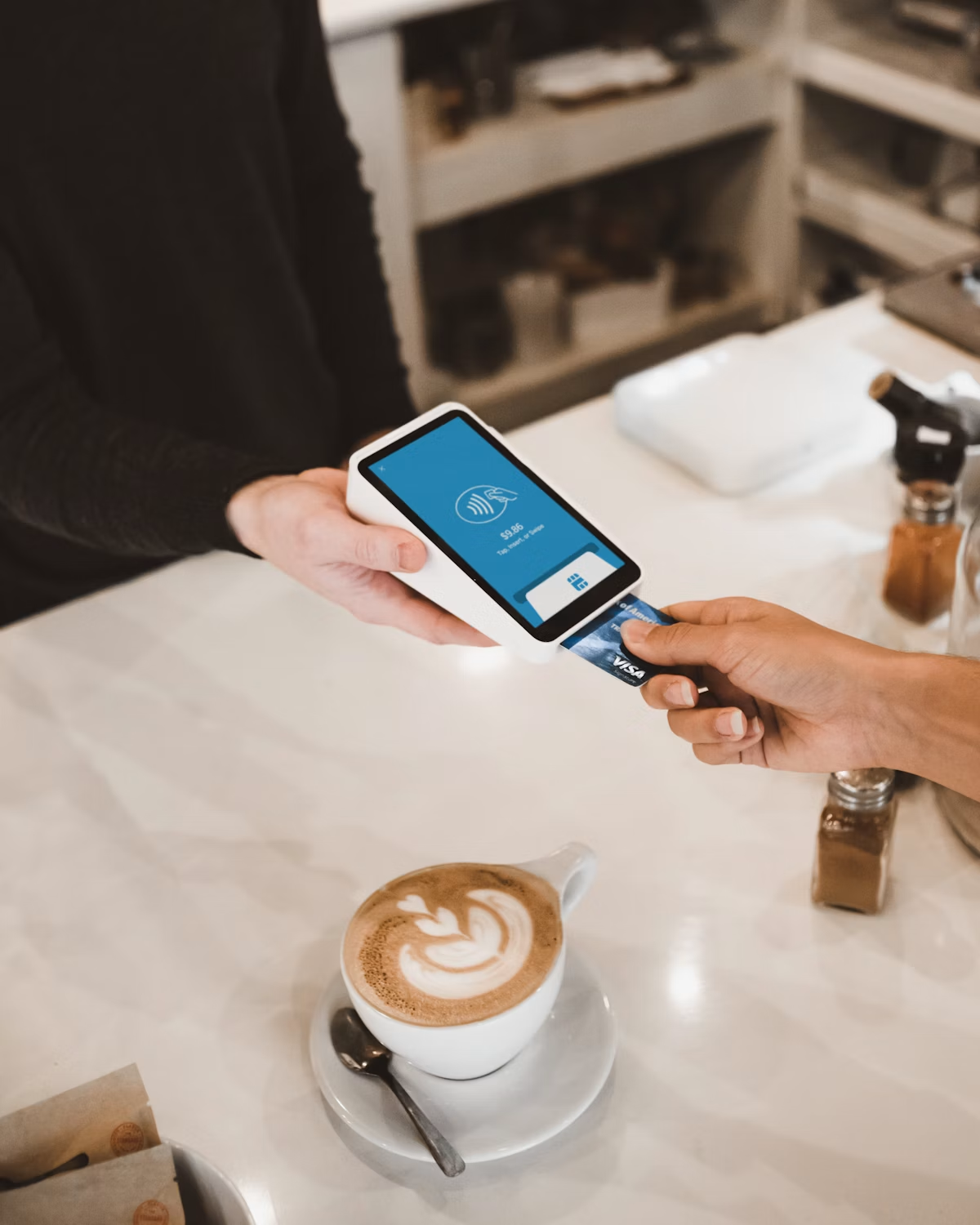
Every Transaction, Explained

Guided Every Step
Why Understanding This Matters
Most business owners know they need to accept credit cards, but very few understand what actually happens after a customer pays. That lack of understanding often leads to confusion about merchant statements, processing fees, and choosing the right payment provider.
Once you understand the process, you'll be in a much better position to reduce fees, improve cash flow, and choose the right payment solution for your business.
Who Is Involved
Many business owners think there are only two parties involved — the customer and their business. In reality, several organizations work together to complete a payment.
The person making the purchase, paying by tap, chip, swipe, or mobile wallet.
The merchant accepting payment for goods or services.
Securely routes transaction information between all parties and helps facilitate authorization and settlement.
Provides the infrastructure that connects banks and processors, such as Visa, Mastercard, Discover, or American Express.
The bank that issued the customer's card, such as Chase, Bank of America, or a credit union.
Works with your payment processor to help move settled funds into your business account.
Cost Factors
One of the biggest misconceptions is that payment processors keep all of the fees. They don't. Processing costs are divided between interchange fees, card brand assessments, and processor fees — and several factors can push your costs higher.
Understanding these factors can help you identify opportunities to lower what you pay.
How It Works
Although it happens in only a few seconds, several organizations work together in every card transaction.
The customer chooses to pay by credit card, debit card, mobile wallet, or contactless payment — at a terminal, online, or through an invoice link.
Before any information leaves your business, it's protected using EMV chip security, end-to-end encryption, tokenization, and PCI DSS standards.
Your processor sends the transaction through the card network to the customer's issuing bank, which checks the card and funds, then approves or declines it within seconds.
Your customer receives a receipt and your POS system records the sale — but the funds haven't reached you yet. The transaction has only been authorized.
Approved transactions are batched and sent for settlement. Most businesses receive deposits the same day, next business day, or within two business days.
Why Work with JadaPay
Business owners trust JadaPay because we focus on long-term relationships — not one-time transactions.
Integrity, transparency, and service are at the heart of everything we do.
We'll review your current statement, explain every fee, and identify opportunities for savings — with no obligation.
We help you understand exactly what you're paying for, including our True Zero Pricing programs and traditional options.
EMV, encryption, tokenization, and PCI DSS standards protect your business and your customers.
Instead of sending you to an anonymous call center, our team helps you understand your options.
Credit card processing, POS systems, mobile payments, virtual terminals, eCommerce, and business funding solutions under one roof.
Who We Help
Whatever way your customers pay, we help you choose a payment solution that fits the way you do business.
Full-service, quick-service, and hospitality operations.
Single-location and multi-location retailers.
Plumbers, electricians, HVAC companies, and service contractors.
Medical practices, dental offices, and professional service firms.
Mission-driven organizations accepting donations and payments.
Consultants, agencies, and firms billing clients by invoice.
Businesses completing purchases through a website or online checkout.
Businesses accepting payments with smartphones or mobile card readers.
Memberships, subscriptions, service contracts, and monthly retainers.
Frequently Asked Questions
Most businesses receive deposits within one to two business days, although some qualify for same-day funding.
The issuing bank declines the transaction and returns a decline code. Common reasons include insufficient funds, expired cards, suspected fraud, or incorrect card information.
Yes. Modern payment systems use encryption, EMV chip technology, tokenization, and PCI DSS standards to protect sensitive information.
In many cases, yes. Many terminals and POS systems can be reprogrammed or integrated with a new payment processor, depending on the hardware and software.
The best place to start is with a professional review of your current merchant statement. Pricing models, equipment, and transaction types all affect what you pay.
Simply call 833-JADAPAY, email info@jadapay.com, or click the Free Statement Analysis button to schedule a no-obligation review with our team.
Why Businesses Trust JadaPay
At JadaPay, we believe payment processing shouldn't be confusing — so we explain every fee and help you find the right solution for your business.
JadaPay helps you understand your merchant statement and stays with you throughout the process.
We explain every fee on your statement, including interchange, assessments, and processor charges.
You get local, responsive customer support rather than an anonymous call center.
A free merchant statement analysis never requires you to switch providers.
Ready to Explore Business Funding?
If your business needs working capital to grow, expand, or improve cash flow, JadaPay is here to help. We'll connect you with our trusted funding partner, answer your questions, and help you determine whether a merchant cash advance or another funding solution is appropriate for your business.
 Call: 833-JADAPAY
 Email: jadapay@jadapay.com